
Transportation authorities and road operators increasingly require flexible and accurate traffic monitoring solutions capable of delivering comprehensive traffic data without disrupting road operations. Traditional technologies, such as inductive loops, often involve costly installation works, lane closures, and dedicated roadside infrastructure, limiting deployment flexibility and increasing operational complexity.
To address these challenges, a new generation of Mobile Traffic Data Collection Stations (ETD) was developed for deployment across road networks in Spain, capable of providing advanced traffic analytics while ensuring rapid deployment and fully autonomous operation. The solution integrates an advanced ALPR system to support vehicle identification and traffic flow analysis.
Solution
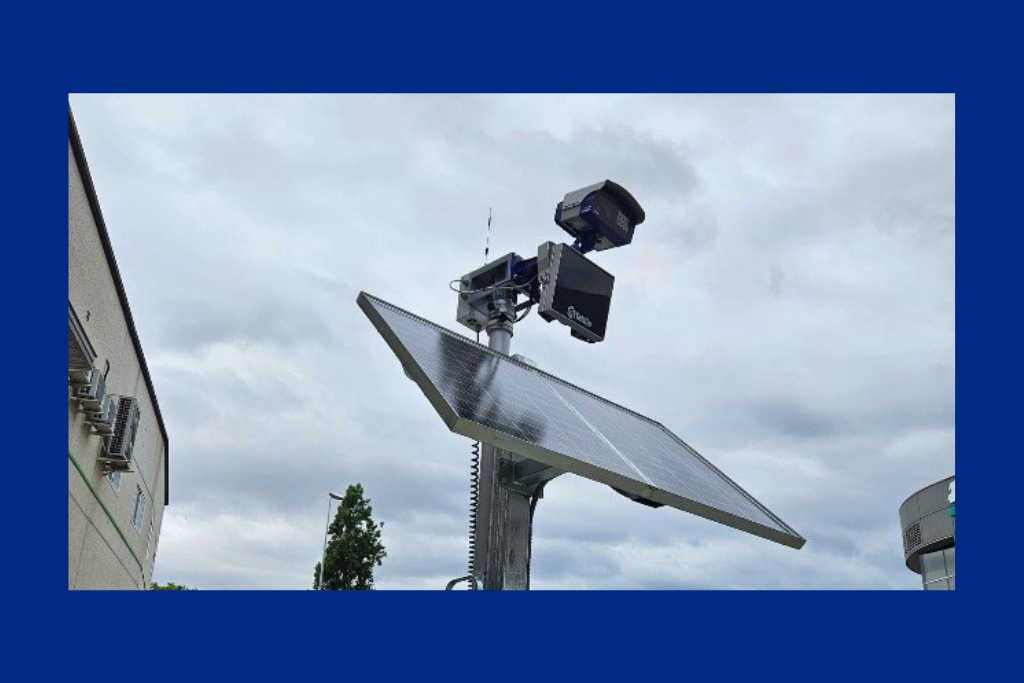
The project adopted Tattile’s Vega53. Combining high-resolution imaging, Automatic Number Plate Recognition (ANPR), integrated infrared illumination, and embedded AI-powered video analytics, Vega53 enables multiple traffic monitoring functions within a single device. As a high-performance ALPR system, the camera supports vehicle detection, classification, speed estimation, license plate recognition, and traffic event detection through a unified platform, eliminating the need for multiple roadside sensors.
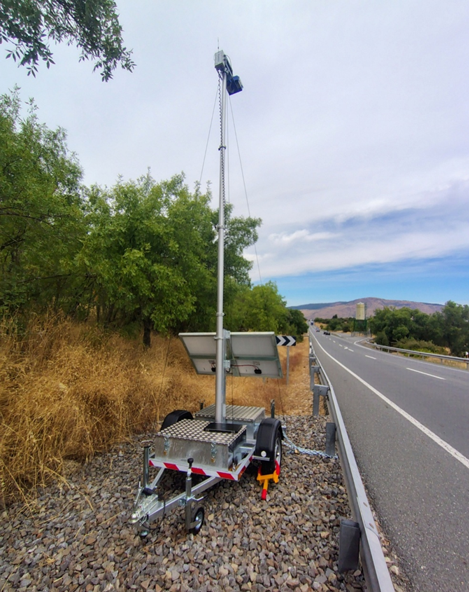
The camera-based architecture allows the stations to be installed in minutes without pavement interventions, civil works, or lane closures. This makes the solution particularly suitable for temporary traffic surveys, mobility studies, road network assessments, and short-term monitoring campaigns.
Key Requirements
A critical requirement of the project was the ability to operate autonomously for several days in real-world conditions. Installed on mobile ETD stations powered by batteries and solar energy systems, Vega53 delivers reliable performance around the clock. Its integrated infrared illumination and advanced analytics capabilities ensure high detection accuracy during both daytime and nighttime operation, as well as under varying weather and lighting conditions. The embedded ALPR system maintains reliable license plate recognition performance even in challenging environments.
Results
The deployment demonstrated how this ALPR system technology can provide a practical and scalable alternative to traditional traffic data collection technologies. Using Vega53, operators gained access to richer traffic information, including:
– Multi-lane traffic monitoring;
– Vehicle counting and classification;
– ANPR and ALPR based traffic analysis;
– Dangerous goods vehicle identification;
– Real-time traffic event detection;
– Traffic flow and road usage insights.
The system successfully validated the combination of rapid deployment, autonomous operation, and high-quality traffic analytics, while significantly reducing installation time and operational impact on road users.
Project Outcome
Following successful pilot validation, the project reached an important milestone with the approval of the first operational deployment consisting of 33 mobile ETD stations.
The results confirmed the effectiveness of Tattile’s Vega53 as the enabling technology behind a new generation of autonomous traffic monitoring solutions. By combining AI-powered technology with an advanced ALPR system, the solution delivers accurate data, operational flexibility, and scalable deployment across a wide range of intelligent transportation system applications.
As traffic monitoring evolves from fixed roadside sensors toward software-defined and data-driven platforms, intelligent cameras are becoming a key component of modern mobility infrastructure. The success of this project in Spain demonstrates how AI-powered traffic monitoring technologies can support the modernization of road infrastructure while reducing installation costs and operational disruption.
Q&A
Q: What traffic data can be collected using a Vega53-based mobile traffic monitoring station?
A: A mobile traffic monitoring station with a Vega53 can collect a wide range of traffic data, including vehicle counts, vehicle classification, speed estimation, license plate recognition, traffic flow analysis, dangerous goods vehicle identification, and real-time traffic event detection.
Q: Why are camera-based ALPR systems becoming more popular?
A: Camera-based traffic monitoring systems provide greater flexibility and data accuracy than many traditional traffic sensors. By combining AI-powered analytics with high-resolution video and ALPR system functionality, intelligent cameras, such as Vega53, can support multiple traffic management applications while reducing installation costs and minimizing disruption to road users.
Q: What is an ALPR system and how is it used in traffic monitoring?
A: An ALPR system (Automatic License Plate Recognition system) uses cameras and intelligent software to automatically detect, read, and process vehicle license plates. In traffic monitoring applications, ALPR systems analyze traffic flows, conduct origin-destination studies, identify specific vehicle categories, and improve the overall quality of traffic data collection.
